Workplace Charging is Underserved and a Great Opportunity
EV Charging Solutions
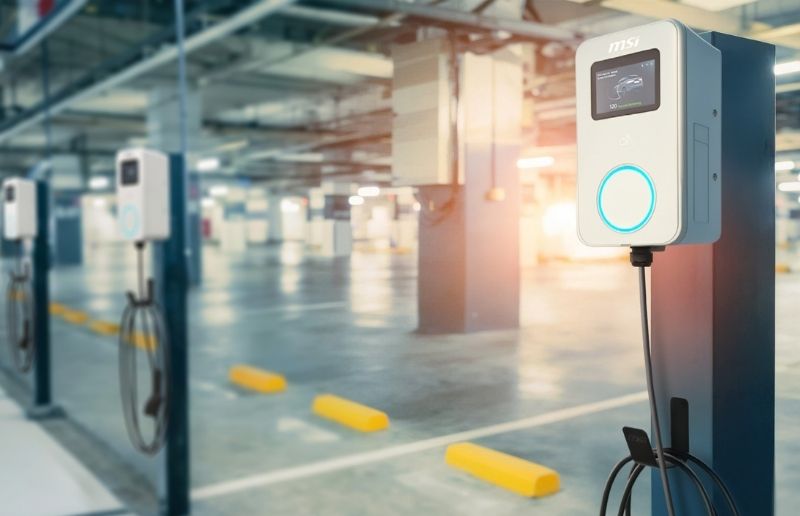
Workplace charging is severely undersupplied and an incredible opportunity in the market. This may be because many workplaces haven't committed to workplace charging or because installation partners haven't made the case directly to facilities managers and corporate park operators. While the greatest percentage of charging happens at home, the second largest segment is workplace charging. That means that workplaces with charging are seeing consistent utilization and those without are prime real estate for adding charging infrastructure. As EV charging adoption continues to grow, infrastructure development is not keeping pace, and the gap between installed supply and driver demand is growing, not shrinking.
The What, Why, and How of Workplace Charging
When it comes to EV charging, DC charging infrastructure is the star, no doubt about it. Federal policy announcements, large-scale grant programs, and corporate partnership press releases all focus on DC charging infrastructure development. DC charging is exciting, but it's also a high capital investment and can take a long time from initial plan to permitting, construction, and commissioning. The real powerhouse of EV charging in terms of number of charging sessions is the humble AC charger.
AC chargers are the standard overnight and workday charging stations. Part of the reason is purely structural. 73% of American commuters drive between home and work and charge at one or both of these locations. The overnight or work shift dwell time is more than enough to fully charge most EVs on a Level 2 charger. DC fast charging is intended for quick pit stops to top up for 15-20 minutes on the highway, not for an 8-hour workday. Additionally, the cost per port for Level 2 chargers is a fraction of what it is for DC fast charging, allowing workplaces to offer more charging for less upfront cost, serving a larger number of employees from the beginning.
According to the International Council on Clean Transportation, there were approximately 124,000 workplace chargers needed in the United States as of 2023. That number is expected to grow to more than 1.7 million by 2032 (which is right around the corner at this point), a pattern we see in Europe and Australia as well. That's a 34% compounded annual growth rate requirement, steeper than public Level 2 or DC fast charging. There simply aren't enough AC workplace chargers, and it's getting worse, not better. Especially when most of the headline investment is focused on DC fast charging and not on Level 2 workplace charging.
The Business Case for Workplace Charging
EV ownership skews strongly toward working-age professionals, those with the capital to purchase or lease an electric vehicle. 98% of those same employees without access to workplace charging said they would be interested or very interested in having access to it. Access to EV charging is attractive to employees, which is attractive to businesses, which is in turn attractive to property management companies looking to extend tenancies. The charging sessions can be paid for by the company, the corporate park, or the employees and visitors directly. Depending on the software backend, access can be split or defined by the management company. Gift cards for EV charging make excellent corporate gifts for EV-driving employees, and workplace charging is a tangible, visible way for companies to demonstrate ESG commitment. Companies, and especially large companies, are increasingly looking for workplaces that already offer EV charging on site.
What Does All This Mean for Installers and Resellers?
While charging networks know all of this well enough and have worked to make inroads into workplace installations just as they have with multifamily housing, they don't have access to all workplaces. Most facilities managers or property management companies are not natural EVSE buyers. They're not seeking out the business case for EV charging and need it laid out for them for it to make sense. Office buildings without existing charging infrastructure need Level 2 AC chargers at scale to meet current and future demand and to remain competitive in a market where EV ownership is only growing. Installers who already have relationships with facilities managers are in the best position to have those conversations. And once laid out, the case mostly makes itself.
The gap between where the current investment in charging exists and where it needs to go is large, but it won't be that way forever. Workplaces need commercial Level 2 AC charging that will stand up to whatever the world throws at them and a solid, well-supported manufacturer who answers the phone should problems occur. That is the MSI Eco Series, which is IP65 rated for any outdoor installation. If you have a project in mind or just want to learn more about the MSI hardware line-up, reach out to our team.