IP and IK Ratings: What Are They?
EV Charging Solutions
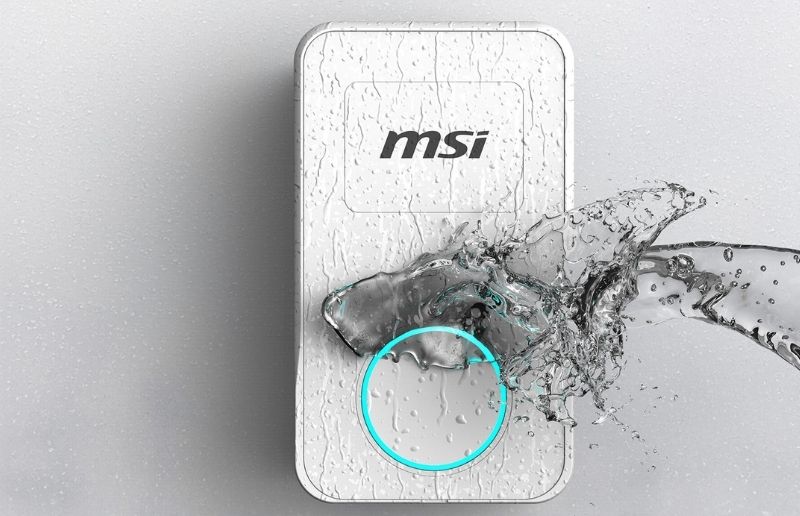
When shopping for an EV charger, two rating systems tell you how well the unit handles its physical environment: IP (Ingress Protection) ratings cover resistance to dust and water, and IK ratings cover resistance to physical impact. Knowing how to read both and then being able to look at your own location and understand it all on the same scale helps you choose a charger that will hold up in the conditions it will actually face.
IP Ratings
Ingress Protection (IP) ratings have two digits. The first identifies solid-particle protection (dust and sand) and the second covers liquid protection.
Solid particle protection runs from 0 (not protected) to 6 (fully sealed). For EV chargers, the most common numbers are:
5 - dust protected - dust can get in, but not enough to interfere with operation
6 - fully sealed - no dust can get in under any conditions.
Liquid protection is rated from 0 (no protection) to 9 (high-pressure steam). The most important numbers to know are:
4 - Protected against splashing water from any direction (important for anything installed outdoors)
5 - Protected against water jets (standard hose or pressure wash)
6 - Protected against powerful water jets (high-pressure hoses or heavy wind and rain, like a hurricane or typhoon)
7 - Protected against temporary immersion up to 1 meter for 30 minutes (for EV chargers, this would mean something that’s expected to be on the ground during heavy rain with standing water or land in deep puddles)
In practice, this means that a charger with an IP55 rating will allow in trace amounts of dust and be resistant to water jets from any direction. This charger would be great for semi-exposed outdoor installations, like a workplace charging bay with an overhang. It can take the occasional hose down and be fine. Probably not the best choice for installations at the seaside or in heavy storm-prone or very dusty areas.
If the installation site will be exposed to driving rains, coastal water sprays, or routine pressure washing, look for a charger with a second-digit rating of 5 or higher: IP55, IP56, IP65, or IP66. If it’s going to be exposed to large amounts of dust and sand from a construction site or arid desert climates, look for IP 65 or higher in terms of the first number. And remember that IP 65 is only higher than IP56 in terms of dust ingress. IP numbers are taken one number at a time and are therefore not truly sequential. The MSI Eco is specced at IP65 to protect against rain, dust, and water jets, and is Salt-Spray Tested for installation at coastal locations.
IK Ratings
IK ratings are more straightforward. They refer to how much energy something can withstand in the form of a knock or a blow, how resistant the device is to direct physical damage. For most outdoor equipment, the standard rating is IK08. This means the device can withstand moderate knocks from tools, equipment, or vehicles. It’s not designed to stand up to violent vandalism.
As for the rest of the IK scale, here’s a quick breakdown of the IK ratings that might matter when comparing EVSE products. IK ratings are measured in joules (the amount of energy delivered by an impact), so they’re pretty easy to convert into real-life scenarios:
IK07: 2 joules. This is a light knock, like a car door tapping or a shopping bag bumping into the charger. This is the minimum rating you want to see for any outdoor installation and is mostly considered a low or too-low standard for commercial EVSE. For home chargers where you have control over the surroundings, this might still be okay.
IK08: 5 joules. This is the standard for most outdoor commercial equipment. IK08 covers a tool dropped from a workbench, a car door swinging into the charger, or a trolley clipping the unit during a delivery. This level of protection is appropriate for workplaces, retail car parks, hotels, and fleet depots.
IK09: 10 joules. This protects against active attempts to break the unit. That covers a deliberate kick or a heavy object dropped from waist height. This might be worth specifying for installations in rougher environments (construction sites) or where the charger is highly exposed to fast moving vehicle traffic.
IK10: 20 joules. This is the highest IK rating and is designed for high-vandalism environments like unattended public street furniture and transit infrastructure. For most managed commercial EVSE installations, this is far more than necessary.
The IK scale, unlike IP ratings, is straightforward and sequential. An IK08 rating is simply stronger than an IK06 or IK07 one. The MSI Eco Series is rated IK08, making it well protected for workplace, retail, hospitality, and fleet depot installations.
IP and IK ratings rarely make headlines, but they're some of the most practically important numbers on a spec sheet. A charger that can't handle its environment won't last, and replacement costs dwarf the small price difference between the right unit and the wrong one. If you're purchasing chargers for a commercial site and want to talk through which ratings are appropriate for your installation, get in touch with the MSI EVSE team. Or if you're ready to explore options, take a look at the MSI Eco Series.